


A packing list is a document that accompanies cargo during international transport. It contains a list of all the goods, their characteristics and packaging, which makes the transport and customs clearance process simpler and more transparent.
The main functions of a packing list
A packing list performs the following key functions:
Helps logistics companies accurately determine the quantity and type of cargo.
Simplifies the customs clearance process by providing the necessary information about the contents.
Eliminates confusion during the unloading and distribution of goods.
Is a mandatory document for most international shipments.
A sample packing list
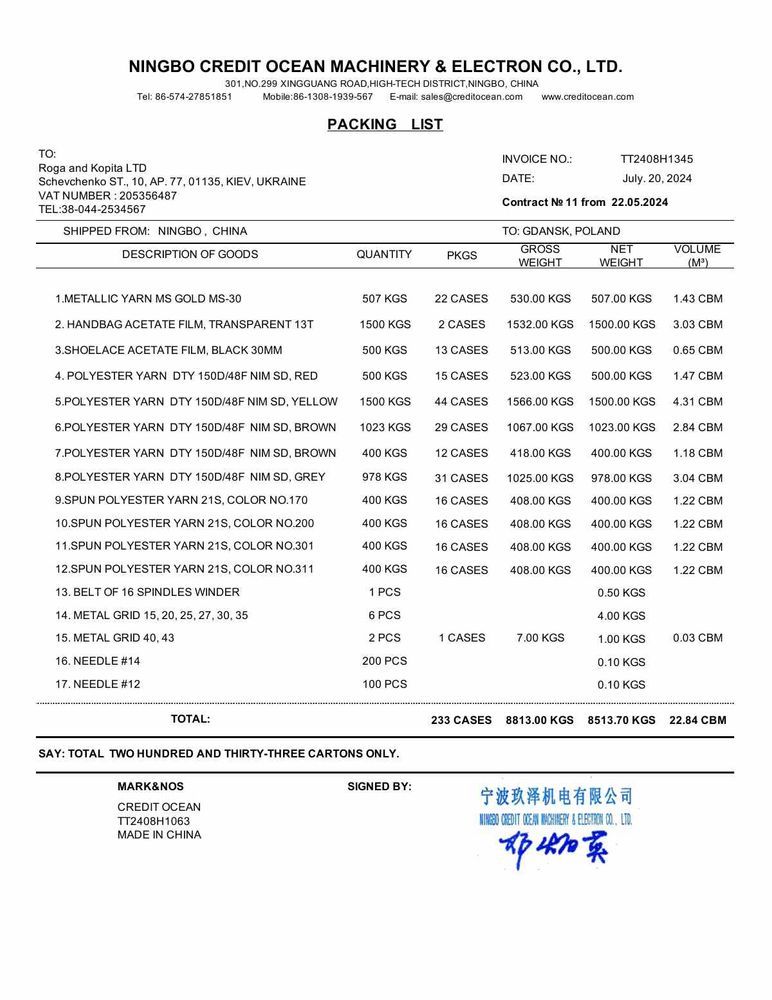
Why is a packing list needed?
A packing list is not only a mandatory document for customs, but also a useful tool for all participants in the transport process.
It is needed for:
Customs: to check that the cargo matches the accompanying documents (the invoice, the contract).
Warehouses: for the accounting and handling of goods.
Customers: to make sure they have received the full list of ordered goods.
Insurers: to assess the cargo when insuring it.
What information must be indicated in a packing list?
Mandatory fields:
The number and date of the document.
The details of the sender and the recipient (name, address, contacts).
A description of the goods (name, article number).
The number of units of goods.
The total weight and volume.
The type of packaging (boxes, pallets, containers).
Recommended fields:
The invoice number.
The customs code of the goods (HS code).
The country of origin of the goods.
The delivery terms (Incoterms).
The container or vehicle number.
Additional fields:
Special storage instructions (for example, "fragile cargo" or "keep in a dry place").
Barcodes or QR codes for quick identification.
The signatures of the responsible persons.