


Let's talk about how to calculate the amount of customs payments in advance for "white" (fully legal) customs clearance. Let's say right away that we are importing goods in the name of a sole proprietor or an LLC, even if you have a small consignment of 100 kg, because there is no point importing cargo in the name of a private individual.
First: taxes are higher for private individuals.
Second: because taxes are higher, goods are rarely cleared in the name of private individuals — usually this is done by beginner entrepreneurs who did not read this post and, out of ignorance, sent the goods in the name of a private individual.
Since there are few clearances in the name of private individuals, there are no good brokers who will help clear goods in the name of a private individual; you will have to go to customs and complete the declaration yourself, or search hard for a broker who will take on the clearance for a private individual.
The principle of assessing customs payments is the same whether in Ukraine, Belarus, Russia or Kazakhstan. We will say more: the principles of assessing customs payments are the same all over the world. There is a harmonized system of customs codes, and when clearing goods each item must be assigned to one code or another.
You yourself, or through a customs broker, select the required customs code and submit to customs a completed customs declaration with the payments to the budget assessed, and it is your (your customs broker's) job and duty to select the customs code correctly according to the description of your goods. The customs inspector merely checks whether you have declared everything correctly in the declaration and whether you have assessed the taxes correctly or not. And if they agree with you, they simply write off to the budget the customs payments that you have previously deposited into the customs account and close the customs declaration. This must be remembered and understood.
Once we have selected the correct customs code, we can see what duty rate will apply to the goods, and whether or not special permit documents are required to import them. For example, to clear a tower crane certificates of conformity may be required; to clear food products of animal origin a veterinary certificate is required. With permit documents it is all a bit complicated, and you need to turn to a customs broker who is in the know and can explain everything precisely regarding the permit documents and the cost of obtaining them.
Note that permit documents are required mainly for food products and complex machinery whose operation can lead to injury to a person if the goods are of inadequate quality. Obtaining permit documents makes clearance more expensive; the good news is that everyone obtains permit documents and the cost is the same for everyone.
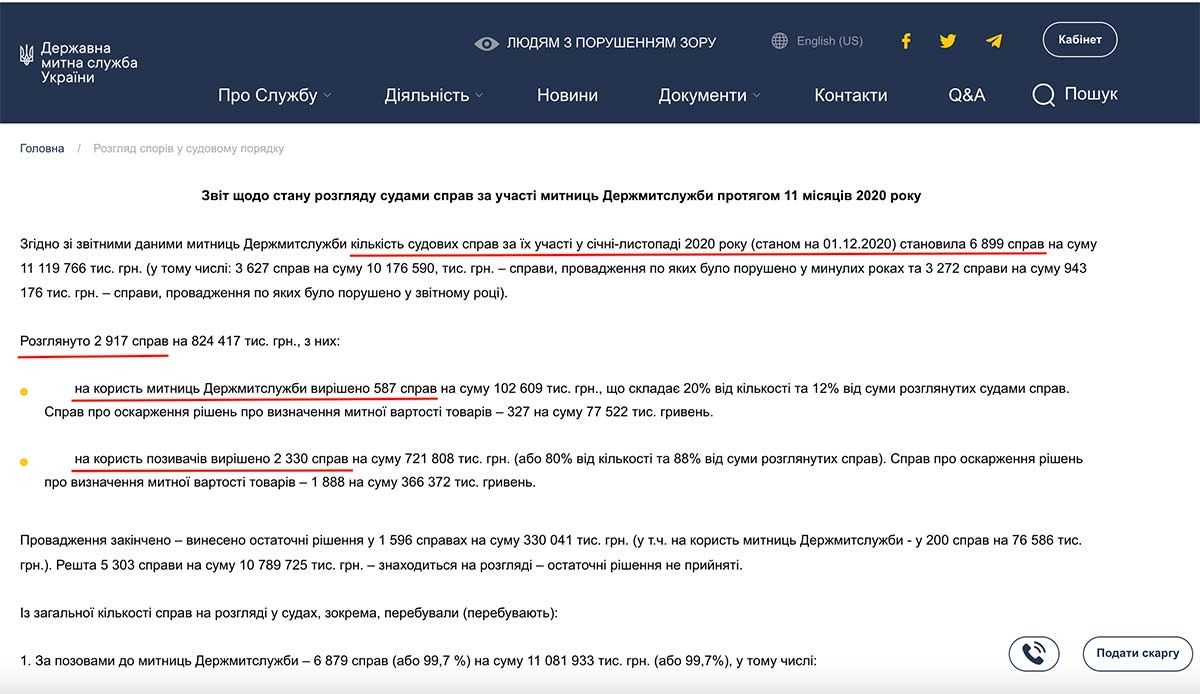
In the previous post we learned where and how to find the customs code and see the duty and VAT rate. The most interesting question remains: on what value must VAT and duty be calculated? In proper countries, taxes on clearance are calculated from the invoice price that you submitted to customs. But we live in improper countries — we have cash-out schemes, you can create a fake incoming of goods, and if customs allowed clearing (paying VAT and duty) from the value declared by the importer, everyone here would write that the whole container costs USD 100 and then buy a fake incoming for the goods. Accordingly, for each customs code customs has its own minimum pass-through price. When the customs broker submits the customs declaration, the inspector opens the customs database and looks at the average price at which, say, leather boots from China are cleared — usually they have an indicative price per 1 kg in the database. And if you are a great buyer and managed to buy leather boots that weigh 1 kg and cost USD 5, the inspector will open the database and say: we are of course glad you made such a good purchase, but according to our database no one has imported them cheaper than USD 10 per kg / per pair, so please assess the taxes from USD 10. And to clear a pair of boots you will have to pay duty of, say, 10% and VAT of 20% on USD 10. If you don't agree, you go and litigate with customs for years, and if you win the case in court, a year later you get back the overpaid charges. Using the example of Ukraine, we show how many court cases there were in Ukraine in 2020; in other CIS countries the situation is very similar — see the figure below.
Now we will learn how to assess customs payments correctly, namely the duty and VAT on a single pair of boots.
Your pair of boots costs USD 5.
However, customs has raised your price to USD 10.
Our duty will be 10%, so we will pay USD 1 of duty.
And to calculate the VAT we use the following formula:
(assessment base USD 10 + duty USD 1) × 20% = USD 2.2 of VAT payable on clearing 1 pair of boots.
In total you will pay USD 1 of duty and USD 2.2 of VAT on clearance.
Payments to the budget are made in the national currency at the national bank's rate on the day of customs clearance.
That's it — you have the cost price, which is calculated as the sum of
the value of the goods in China + the cost of transport + the cost of the broker's work + duty USD 1, VAT USD 2.2. In total you get the cost price of 1 pair of boots if you were importing and clearing 1 pair of boots.
What did we lay all this out for? So that, sitting at home, you can estimate the approximate cost price before importing a real consignment of goods. Once you have calculated the approximate cost price and it suits you, we still recommend getting an invoice from the Chinese and working everything through with a customs broker.
The broker will select the correct customs code, calculate all the payments correctly and give you the cost price; and an experienced broker will also go to customs, talk to the customs inspector, get the pass-through price from customs and calculate your payments from the price that customs tells you on the day the declaration is completed.
The only nuance you must understand is that the inspector does not have a fixed price for a specific product — they have a range. Today they may tell you USD 10 per pair of shoes, and tomorrow USD 9 per pair, and that is normal — a range of 5–10%. There are mass-market goods, for example potatoes from Egypt, where they earn on volume, and so the range in the database between the most expensive clearance and the cheapest is 10 cents, because if you clear potatoes 50 cents more expensively than competitors, you will sell them at zero profit or even at a loss. Note an important point: if you do not understate the price in the invoice, then with a probability of 9 out of 10 the inspector will confirm your invoice price on clearance.