


Now we are going to learn how to find customs codes for goods. We need these customs codes in order to understand what duty rate and permit documents will be required when clearing the goods. Knowing the customs code also lets you analyse competitors by making a selection of all the customs clearances of the goods you are interested in. This question is not covered in this post, but you can turn to the professionals, who will help with this too.
A bit of theory: The Commodity Nomenclature of Foreign Economic Activity (TN VED) is developed on the basis of the Harmonized Commodity Description and Coding System (HS), which was adopted by the World Customs Organization (WCO). The Harmonized System is an international standardisation system consisting of 6-digit codes that classify goods according to their type and characteristics.
The Harmonized System allows countries to unify the description of goods for international trade, which helps to simplify and standardise customs procedures. On the basis of this system, each state can add extra digits for a more detailed description of goods in line with national needs — which is exactly what the TN VED does.
Thus, the TN VED is an extension and detailing of the Harmonized System for use in a particular country, providing the ability to classify and account for goods more precisely using 10 characters.
Note that for the same goods the customs code coincides in all countries of the world. Small differences may be observed in the last four characters, depending on the country.
For clarity, let's find the customs code for a wooden writing desk, using the example of Ukraine and Russia. To do this we go to https://www.qdpro.com.ua/uktzed for Ukraine and https://www.alta.ru/tnved/ for Russia.
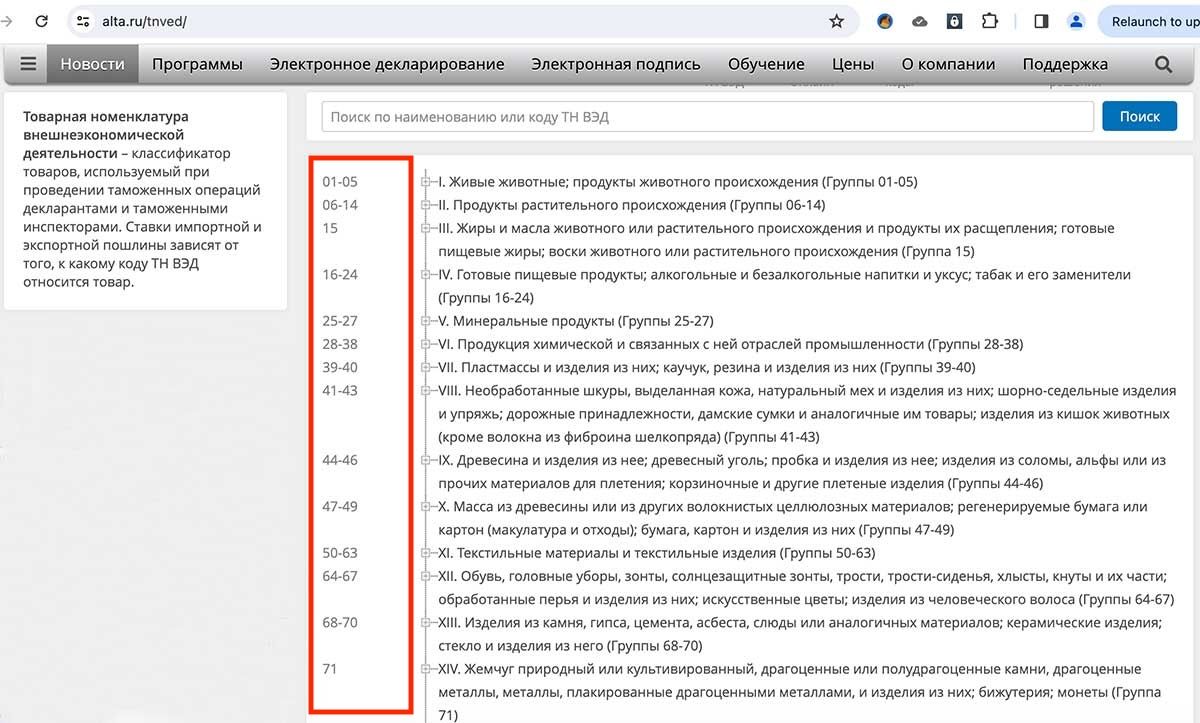
We see a page with sections. All goods are distributed into groups, from group 01 — products of animal origin — to group 97 — works of art.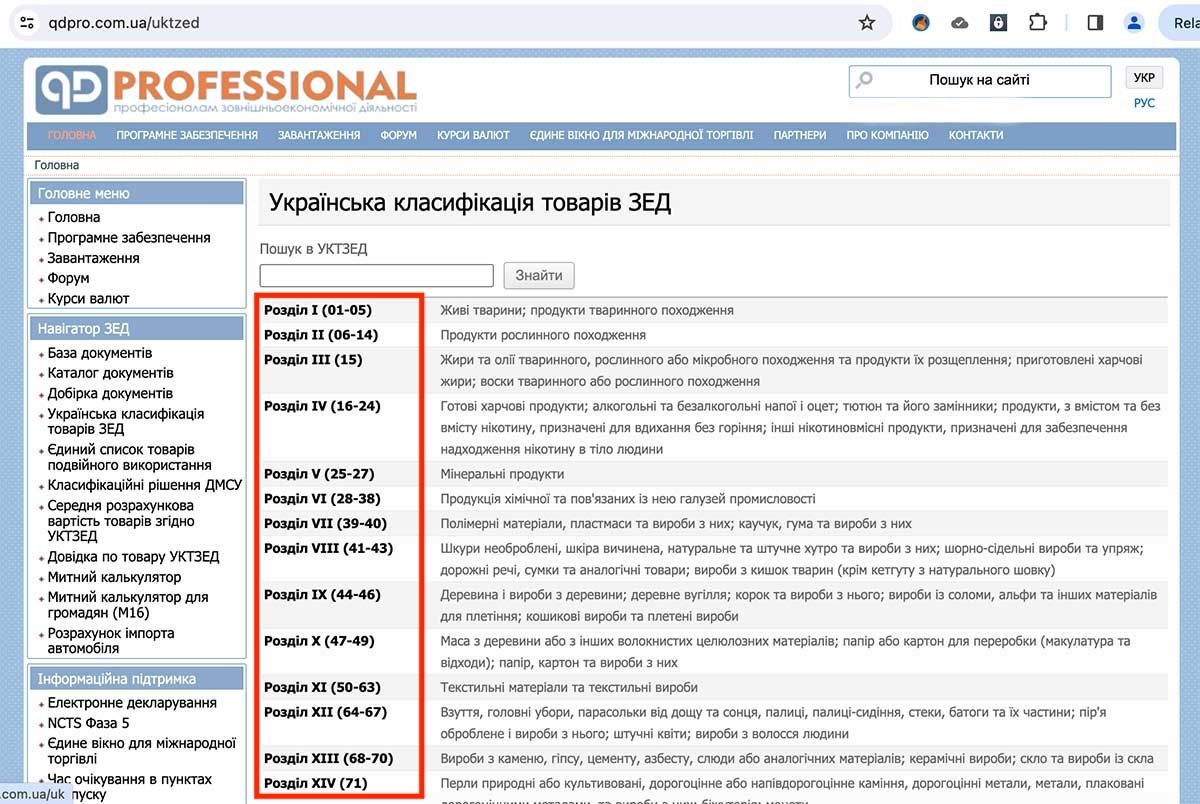
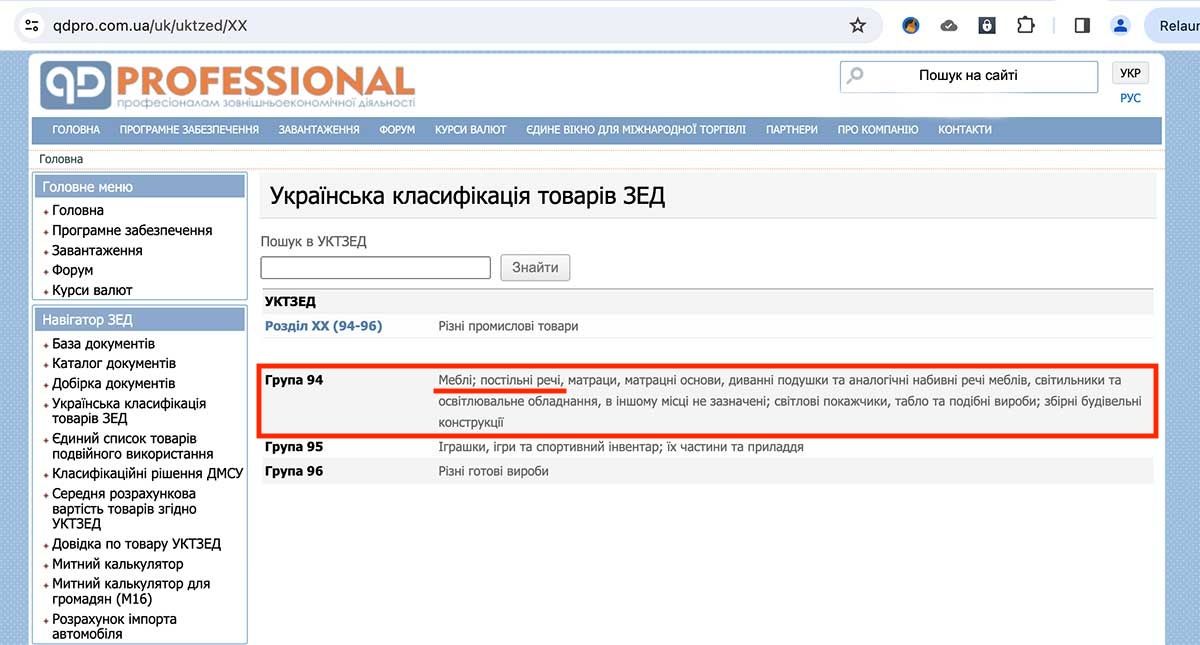
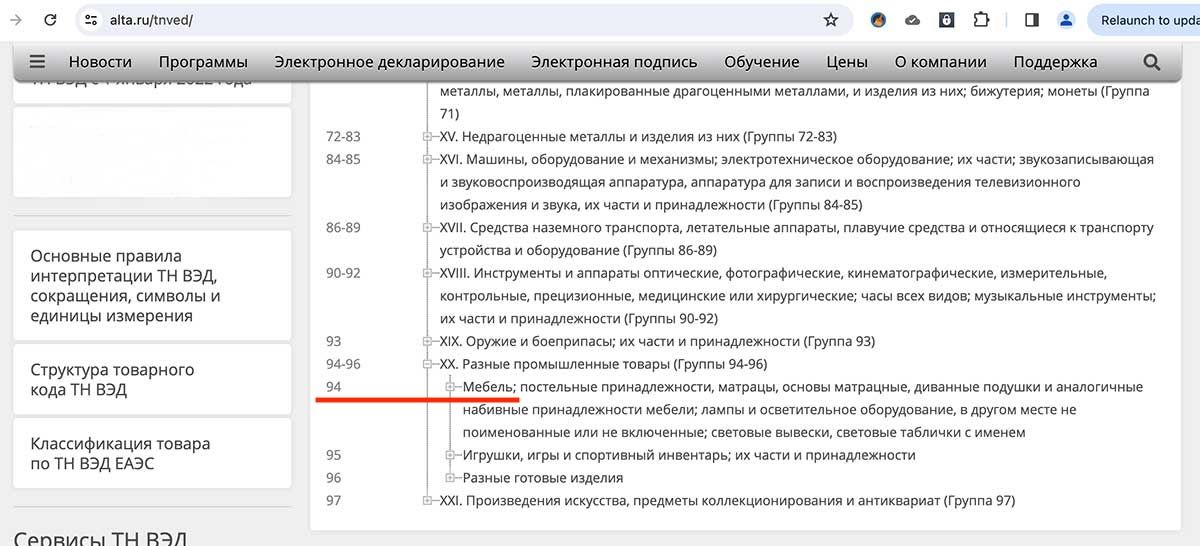
With a little experience, I go straight to group 94 — Miscellaneous manufactured goods. Opening group 94, we see that it includes furniture and bedding.
Having opened group 94 and run through all the subgroups, we find our goods by elimination. Opening subgroup 940330, we saw that it contains wooden furniture used in offices. Going a few levels deeper, we see the customs code - - - 9403 30 11 00
writing desks.
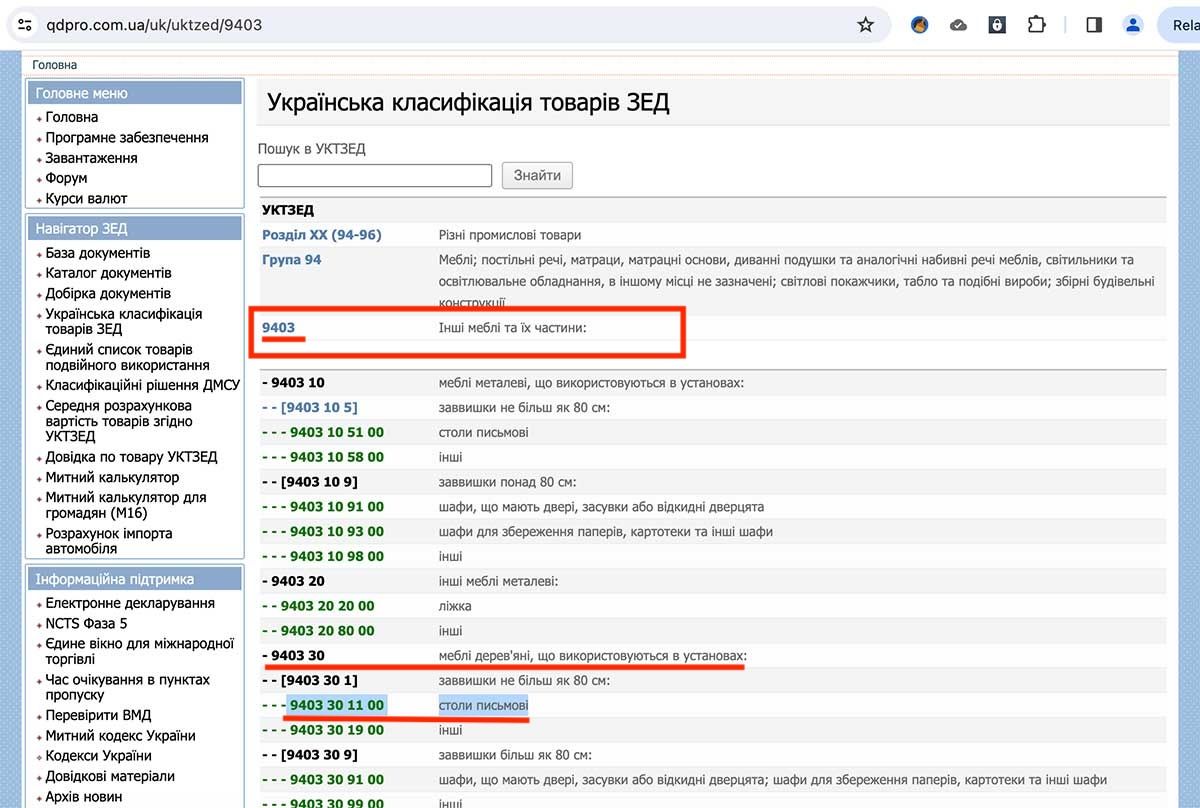
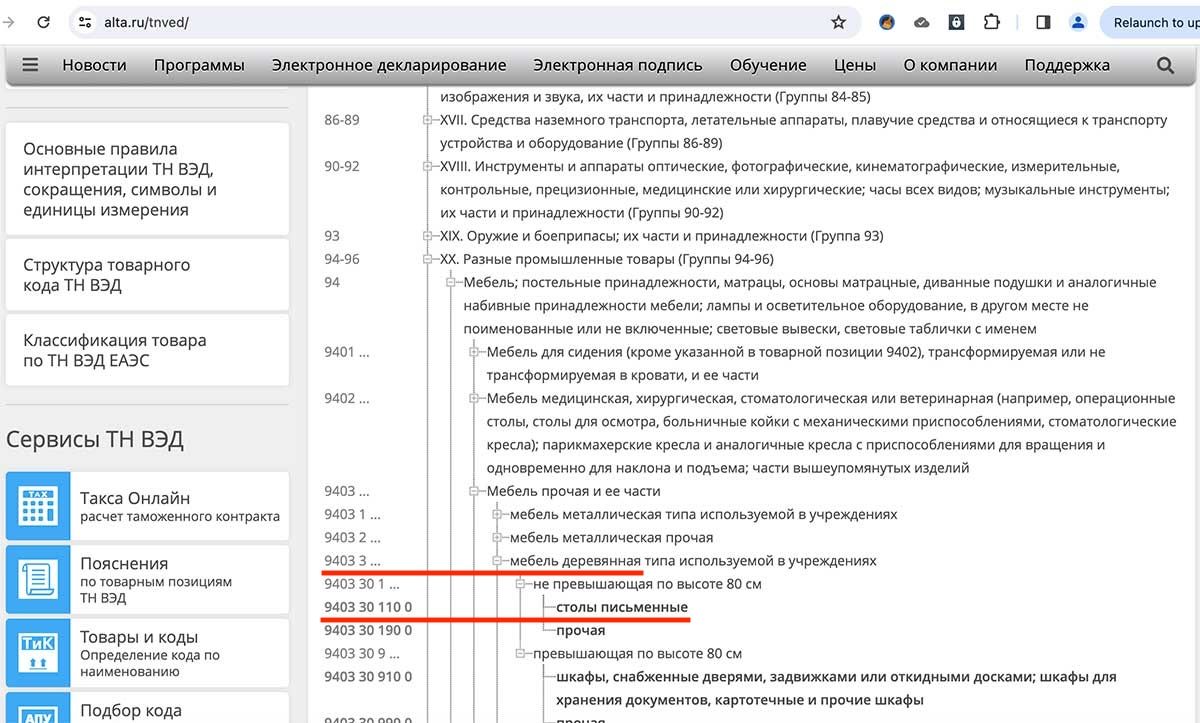
That's the bird in the cage — we click on the customs code and land on the product card, where we can see what duty rate applies to our goods and whether permit documents are required for customs clearance or not.
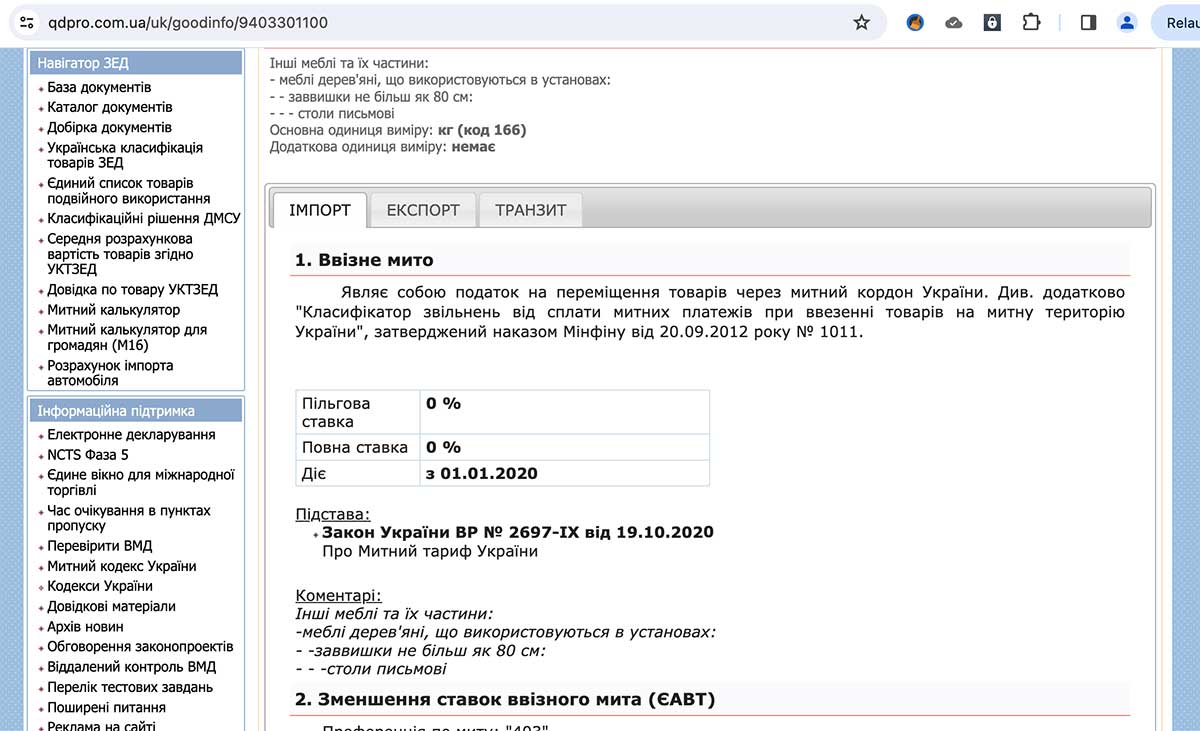
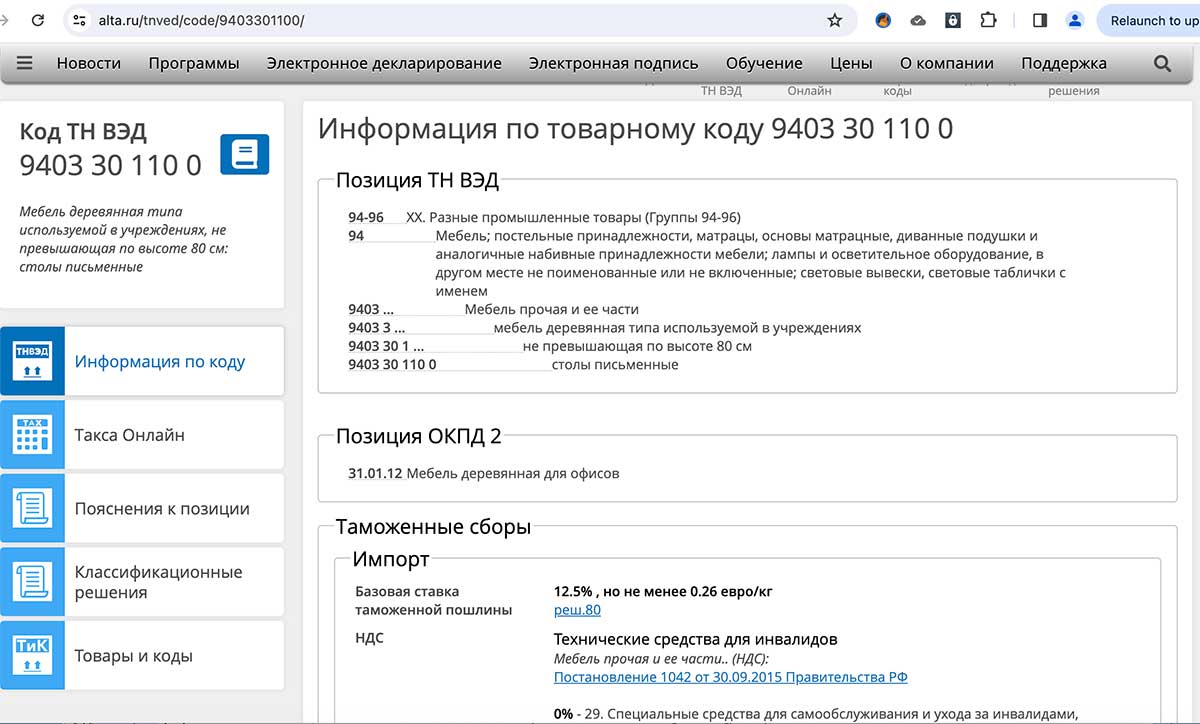
What to remember:
You find the customs code for a preliminary calculation. If you are not sure the chosen code is correct, you can turn to the customs authorities for a consultation. Customs has a so-called Nomenclature department. However, we recommend turning to a customs broker.
Customs codes change periodically. The last 4 digits of the code for your goods may change.
Check back periodically to see changes in the duty rate and the required permit documents for your commodity code.